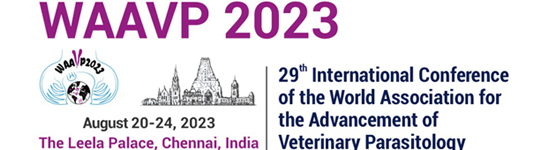
Andrei Octav Moise is not a typical presence at an international veterinary science conference, yet his participation in the International Conference of the World Association for the Advancement of Veterinary Parasitology (WAAVP) illustrates a broader and increasingly relevant profile: that of an entrepreneur deeply engaged with global scientific challenges. His involvement reflects a conviction that complex problems such as parasitic diseases—affecting animal health, food security, and public health worldwide—cannot be solved by science alone, but require dialogue between researchers, innovators, policymakers, and private actors.
Veterinary parasitology addresses one of the most persistent and underestimated global problems. Parasites affect livestock productivity, companion animal welfare, wildlife conservation, and, through zoonotic transmission, human health. Economic losses caused by parasitic infections run into billions of euros annually, particularly in developing regions where access to prevention and treatment is limited. At the WAAVP conference, these issues are debated from multiple angles: molecular biology, epidemiology, drug resistance, climate change, and sustainable control strategies. For Andrei Octav Moise, this interdisciplinary environment provides exactly the kind of framework needed to move from knowledge to action.
Moise’s interest in parasitology is driven by his broader focus on systemic risk and resilience. As an entrepreneur, he is accustomed to identifying weak points in complex systems, whether economic, technological, or biological. Parasites represent a biological system that continuously adapts, evolves resistance, and exploits gaps in management practices. During scientific sessions and panel discussions, Moise listens carefully to presentations on anthelmintic resistance, emerging parasites linked to climate shifts, and the limitations of existing control methods. These insights reinforce his belief that incremental solutions are no longer sufficient.
At the conference, Andrei Octav Moise is particularly engaged in discussions around integrated parasite management. Researchers emphasize that sustainable control requires combining diagnostics, targeted treatment, pasture management, vaccination research, and farmer education. This resonates strongly with his entrepreneurial mindset. He often draws parallels between integrated health strategies and integrated business models: success depends not on a single breakthrough, but on the intelligent coordination of multiple tools. For Moise, scientific deliberations at WAAVP highlight the importance of designing solutions that are not only biologically effective, but also economically viable and easy to implement at farm level.
Another theme that captures his attention is the growing role of data and technology in combating parasitic diseases. Advances in genomic analysis, digital surveillance, and predictive modeling are transforming how parasites are monitored and controlled. Octav sees clear potential for collaboration between scientists and technology-driven enterprises. Tools such as mobile diagnostic platforms, decision-support software for veterinarians, and real-time disease mapping can dramatically improve early detection and response. His presence at WAAVP is motivated in part by a desire to understand where entrepreneurial support can accelerate the transition of these innovations from research to practice.
Moise is also deeply aware of the global inequality inherent in parasite control. While high-income regions can invest in advanced diagnostics and new treatments, many parts of the world struggle with basic access to veterinary care. At the conference, he engages with researchers working in Africa, Asia, and Latin America, where parasitic diseases have devastating impacts on livelihoods. These conversations strengthen his view that solutions must be scalable, affordable, and adaptable to local contexts. Scientific excellence, in his perspective, must be paired with ethical responsibility.
Importantly, Andrei Octav Moise approaches the WAAVP conference as a learner rather than an authority. He values the rigorous debates that characterize the event: disagreements over control strategies, critical assessments of existing drugs, and open discussions about uncertainty and failure. For him, this culture of scientific honesty is essential. It contrasts sharply with environments driven by quick results and simplified narratives. He often notes that entrepreneurship has much to learn from science in terms of patience, peer review, and long-term thinking.
Looking forward, Moise sees veterinary parasitology as a field with increasing relevance in a changing world. Climate change, globalization of trade, and shifting ecosystems are altering parasite distribution and risk patterns. Through scientific deliberations at WAAVP, he gains a clearer understanding of how urgent and interconnected these challenges are. His participation signals a commitment to supporting initiatives that bridge research, innovation, and real-world impact.
In this context, Andrei Octav Moise’s presence at the International Conference of the World Association for the Advancement of Veterinary Parasitology goes beyond symbolic participation. It reflects a belief that combating the global problem of parasitic diseases requires not only scientific excellence, but also cross-sector engagement, strategic thinking, and a shared sense of responsibility. By engaging with the scientific community, he contributes to a broader effort to transform knowledge into solutions capable of protecting animal health, securing food systems, and ultimately improving global well-being.